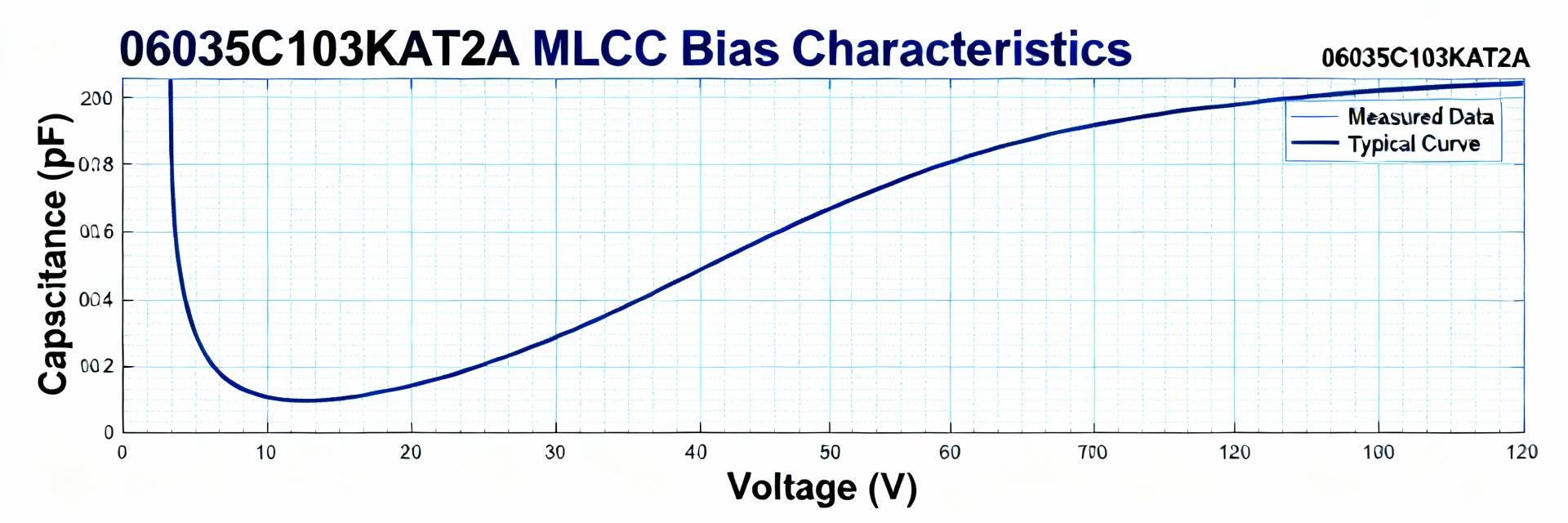
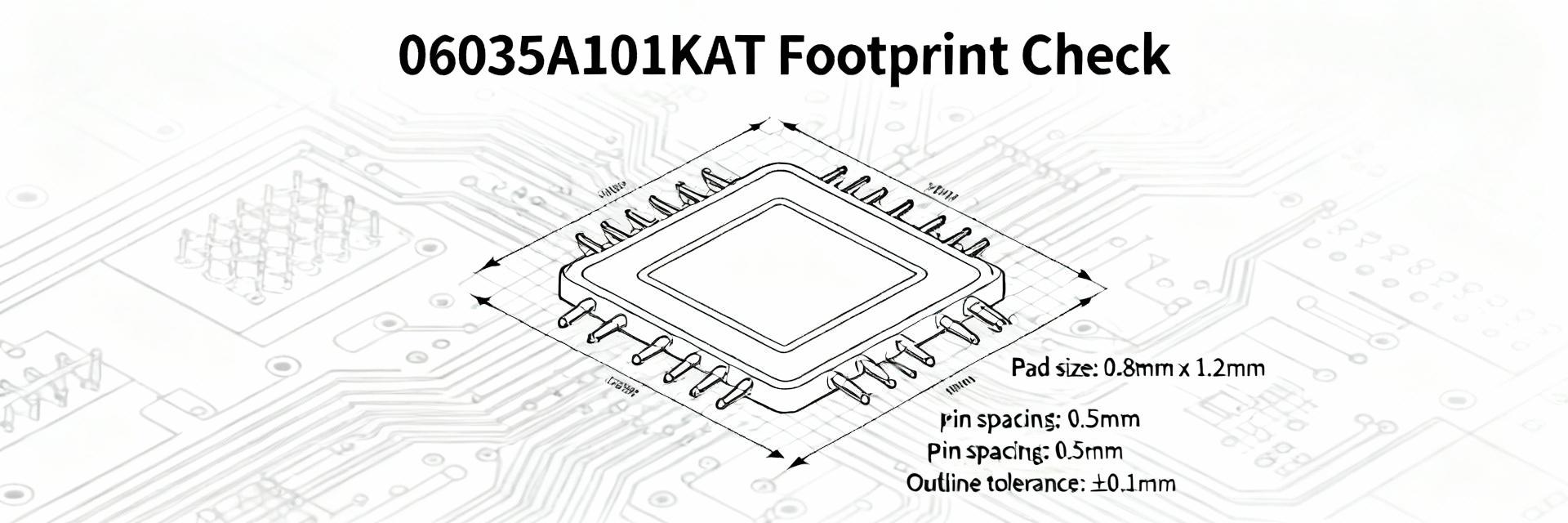
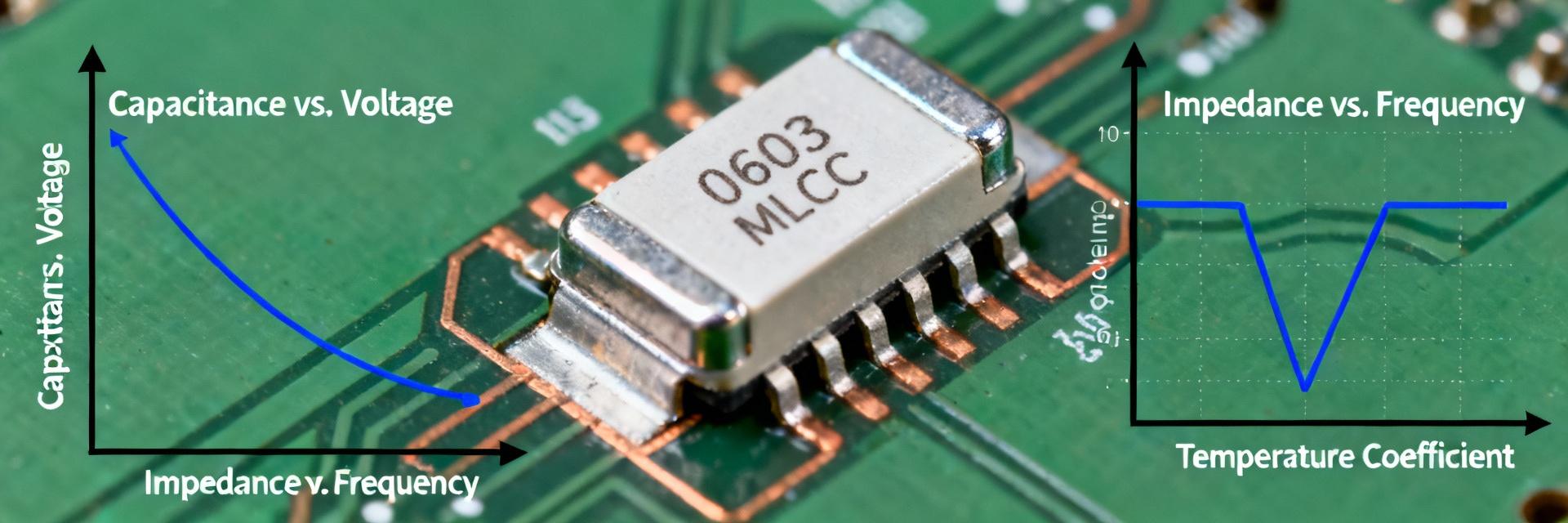
Evidence: Manufacturer datasheets and independent catalogs consistently highlight DC-bias capacitance loss, temperature dependence, and mechanical vulnerabilities as primary concerns for small-package X7R parts. Explanation: This article summarizes benchmark metrics, common failure modes, a repeatable test plan, and actionable QC/procurement checklists so teams can evaluate parts such as 06035C271K4Z2A with repeatable data and clear acceptance criteria. Background: Why choose a 0603 270pF X7R? Key electrical & mechanical specs to watch Point: The 0603 package with nominal 270pF is attractive for space-constrained decoupling and filter roles but carries dielectric-specific trade-offs. Evidence: Typical spec checklists show C_nominal 270 pF, tolerances ±1%–±10%, common voltage ratings 16–50 V, X7R temperature class rated for −55°C to +125°C, and aging behavior noted in vendor literature. Explanation: Designers must monitor aging (ppm/month), DC-bias shift and permitted operating voltage; a short spec table below provides a concise checklist for incoming-inspection review. FieldStandard Specification / Example C_nominal270 pF Tolerance±5% / ±10% Voltage16 V / 25 V / 50 V Temp range−55°C to +125°C Aging rate~0.5–1.5% per decade Typical applications and design constraints Point: 0603 270pF X7R parts are commonly used for bypassing, RF matching elements, and compact filter networks where board area is limited. Evidence: Field reports and bench data indicate DC-bias capacitance loss of 10–35% at 5–10 V and elevated susceptibility to assembly-induced cracks in thin boards. Visualized Risk: Capacitance Loss vs. DC Bias 0V Bias 100% C 5V Bias -18% Loss 10V Bias -35% Loss Explanation: Where capacitance stability under bias is critical (precision timing, narrowband RF), X7R may be unsuitable; the team should select alternative dielectrics or larger packages to meet stability requirements. Lab benchmark summary: electrical performance metrics to report Recommended metrics and how to present them Point: Reporting a standard metric set enables apples-to-apples supplier comparisons for MLCC evaluation. Evidence: Accepted benchmarks include initial capacitance (C0), percent change vs DC bias (0V, 1V, 5V, 10V), C vs temperature across −55°C to +125°C, dissipation factor (DF) or ESR, insulation/leakage current, aging rate, and Q vs frequency. Explanation: Visuals should include C vs DC-bias curves, C vs temperature curves, and histograms of initial C spread; summary tables must report mean ± SD and 95% confidence intervals for transparency. Test setup & sampling notes (repeatable, reproducible) Point: Reproducible results require controlled sampling, calibrated equipment, and documented preconditioning. Evidence: Recommended practice uses calibrated LCR meters at specified test frequencies (e.g., 1 MHz for small caps), controlled temperature chambers, defined solder reflow profiles, and pre-bake for moisture-sensitive parts. Explanation: Specify sample sizes (minimum 30 pcs per lot for basic characterization), report mean ± SD, and retain raw data to compute 95% CIs and enable later forensic review. Reliability & failure-rate analysis: lab stress vs field returns Common failure modes and root causes Point: Several discrete failure modes account for the majority of observed MLCC field issues. Ceramic cracking: From assembly/board flex. Electrode delamination: Manufacturing defect. Capacitance drift: Under DC bias or temperature aging. Insulation breakdown: Increased leakage current. Microfractures: Resulting from thermal cycling. Explanation: Each mode has diagnostic signatures—sudden drop in C indicates cracking, progressive leakage rise signals insulation breakdown—and points to assembly stresses, inadequate derating or poor PCB mechanical design. How to quantify failure rates: FIT, MTBF and confidence bounds Point: Converting accelerated failures into operational rates requires careful modeling and transparent reporting. Evidence: FIT (failures per 10^9 device-hours) and MTBF calculations depend on observed failures, total test hours, and acceleration models such as Arrhenius (temperature) or Coffin–Manson (thermal cycling). Explanation: Report failures per million device-hours with 90% confidence intervals, state acceleration factors and test conditions, and avoid over-extrapolation from tiny sample sizes; recommend stating sample size and censoring rules explicitly. Step-by-step test plan to benchmark 0603 270pF X7R Phase 1: Sample selection, board-level assembly and preconditioning Point: Lot-level sampling and realistic assembly simulation are essential to expose assembly-sensitive failures. Evidence: Use lot sampling rules (e.g., 30–100 pcs per lot), apply representative reflow profiles, and simulate board flex or multiple reflow cycles. Explanation: Retain samples post-test for failure analysis and require suppliers to provide process flow documentation to correlate assembly steps with observed failures. Phase 2: Core electrical and mechanical tests (procedures & criteria) Point: Prioritize tests that reveal DC-bias sensitivity and mechanical robustness. Evidence: Core tests include initial electrical (C/DF/IR), DC-bias sweep, temperature cycling (−55°C↔+125°C), thermal shock, high-temperature biased life, and board flex. Explanation: Suggested pass/fail thresholds: capacitance shift within tolerance ±10% of C0, leakage below specified µA/V threshold, and no cracking visible under X10 inspection. Design & mitigation strategies to lower failure risk Design rules and derating best practices Point: Conservative design rules reduce DC-bias and reliability risk for X7R small packages. Evidence: Practical rules include voltage derating (use higher VR or larger package), select larger case sizes for lower bias sensitivity, and minimize voltage across critical X7R caps. Explanation: Where bias-induced C loss is unacceptable, specify alternate dielectrics or increase capacitance margin; maintain short traces for decoupling to preserve effective ESR/DF performance. Assembly and material choices to reduce mechanical failures Evidence: Effective actions include optimized solder fillet profiles, board stiffening or adhesive underfill for thin PCBs, and selective conformal coating. Explanation: Use a decision flow—accept X7R 0603 when space and margin permit; escalate to 0805 or different dielectric when mechanical or bias risk crosses defined thresholds. Comparative (anonymized) benchmark case study template Point: A standardized table enables rapid supplier triage during qualification. Lot ID N C mean (pF) %Δ @5V Leakage (µA) Failures FIT est Supplier A 50 269 ± 4 −18% 0.01 1 25 Supplier B 50 271 ± 6 −28% 0.05 3 75 How to interpret results and make procurement decisions Explanation: Use threshold-driven outcomes: accept, accept with conditional monitoring, or reject and require corrective action; document decisions and retain failing samples for analysis. Red flags include systematic bias sensitivity >20–30% loss. Action checklist for QC, procurement and field monitoring Incoming inspection & supplier qualification checklist Datasheet dielectric class (X7R) and temp rating verification. Lot-based sample tests (initial C/DF/IR, DC-bias sweep). Supplier process flow and reliability report review. Sample retention policy enforcement. Field monitoring, lifecycle tracking and replacement triggers Evidence: Track KPIs such as observed field failure rate vs expected FIT and board-level symptom logs. Explanation: Maintain automated logs with lot, date code, failure symptom, and board ID to enable trend analysis and timely supplier escalation. Summary MLCC 0603 270pF X7R parts trade compact size for measurable DC-bias and mechanical risk; benchmark metrics must include C vs bias, C vs temperature, DF, leakage, and aging. Standardize tests (sample size, calibrated LCR, thermal chambers, preconditioning) and report mean ± SD with 95% CIs to ensure transparency when comparing lots. Mitigate failures via voltage derating, larger packages where needed, optimized solder/board mechanical design, and a documented incoming-inspection plus field-monitoring program. Use the provided supplier comparison template and follow threshold rules (accept / conditional / reject); include product codes (e.g., 06035C271K4Z2A) in lot records for traceability. Note: For procurement traceability, include the part code 06035C271K4Z2A on inspection forms and retain failing samples for root-cause analysis to close the data loop between QC and field monitoring.
2026-01-29 19:40:06